Gold IRA Rollover — Invest Your Retirement Funds in Precious Metals
 By Tim Schmidt Sr.
Gold IRA Investor.
A Gold IRA rollover transfers retirement funds from an existing account (for example, a 401(k) or traditional IRA) into a self-directed IRA that holds IRS-approved physical precious metals such as gold, silver, platinum, or palladium. The process requires choosing an experienced custodian, funding the new self-directed account via a direct transfer or rollover, selecting IRS-approved metals, and arranging secure, IRS-approved storage in a depository. While gold IRAs offer diversification and a tangible hedge against inflation and currency risk, they also come with higher fees, storage and insurance costs, and reduced liquidity compared with traditional paper investments.
Basic Overview of a Gold IRA Rollover
- A gold IRA rollover lets you hold IRS-approved physical metals in a tax-advantaged retirement account.
- Use a direct transfer for a safer, easier rollover.
- Choose a reputable custodian and dealer — fees and service quality vary widely.
- Expect higher costs than paper investments: dealer premiums, custody fees, and storage/insurance charges.
- Balance your portfolio — experts suggest that precious metals should be 10% of retirement assets.
- Storage, documentation, and compliance are essential — don’t skip these details.

Why People Choose to Put Their Retirement Savings into Gold
Before I really get into the process to roll over a 401(k) or other retirement savings into a gold IRA, I want to briefly share why most people tend to do this.
We all know that the economy has been pretty up and down over the past few years, and what we have seen is that precious metals, during that time, have soared in price. In fact, as of the time of this writing, gold hit its highest all time price of $4,381.58/ounce only weeks ago.
This shows that what we know of history is true; gold and other precious metals perform differently than the stock market. Then, when you add inflation in there, it’s only a matter of time before your existing IRA or 401(k) begins to tank.
What if, however, you had the chance to diversify your retirement savings? What if you could take a portion of those funds you already have, or cash that you have been saving, and invest in a retirement plan that is based on gold? You can — by starting the rollover process and opening a gold IRA account.
Many investors make this decision, because they know it’s more than hype; it’s logical. Gold has a history of holding value, even in times of high inflation and political uncertainty. This makes it a great option for investors who want wealth preservation and long-term investment potential. Also, precious metals IRAs have tax advantages.
Are you ready to decide if a gold IRA is a good idea for you? Let’s find out.
Step 1 — Decide If an IRA Rollover to Gold is a Good Idea for You
Before doing anything, it’s best to sit down and ask yourself some practical questions. This isn’t something you want to simply do on a whim, especially if you have tens of thousands of dollars in play. Here are some questions you should ask yourself before you start any type of rollover process:
- Why am I buying gold (diversification, inflation hedge, emotional comfort)?
- How much of my retirement should be in precious metals?
- Do I understand the gold IRA rollover rules and storage requirements?
- Can I tolerate the fees and reduced liquidity?
For those who are close to retirement, a gold IRA might be less suitable. However, if you still have several years before you retire and you want a long-term plan, looking into a rollover might be a perfect option. This is especially true if you want to diversify.
Step 2 — Learn the IRS Gold IRA Rules for a Gold-Backed IRA Account
One of the biggest surprises that people get when they start looking into gold investments for retirement is that there are rules that they have to follow.
The first main rule is that you can only store gold for an IRA in a depository. You cannot store this gold at home or even in your bank. Furthermore, the depository you choose must be IRS-approved, and you have to pay an annual fee to store your physical gold.
Another rule that you need to keep in mind is that you can’t use just any type of gold or precious metal in your account. It can only be IRS approved gold or IRS approved precious metals. This means that not every gold or silver coin you buy from a local coin dealer is IRA eligible.
I know this seems confusing, but if you work with a good gold IRA company, they will help by telling you which gold coins, gold bullion, etc, is IRA eligible.
Finally, you may be surprised to know that you have to work with a reputable gold IRA company that works with an IRS approved gold IRA custodian.
If you don’t follow these rules, you can get in a lot of trouble with the IRS, and the fines and penalties for this type of sidestep are severe. So, it’s best, if you are going to do any type of rollover, to choose the best gold IRA custodian you can find. They will help every step of the way.
Step 3 — Choose a Reputable Custodian for a 401(k) Rollover to Gold IRA
Like I said, having the right gold IRA provider by your side throughout this process is imperative. In fact, I would say that this is the most important step in the process. There are all types of gold IRA companies and custodians out there, but not all of them are actually good ones. Never, ever trust your money with a non-reputable gold IRA company. I have written several reviews on gold IRA companies, and I invite you to take a look at those to see my favorite options.
After narrowing your options down to a few choices, before you open a new gold IRA, you should ask yourself the following about each of these companies, and then compare to find out what’s best for you:
- Does the custodian specialize in self-directed IRAs that hold metals?
- What are their setup fees, annual custody fees, and transaction fees?
- Which depositories do they partner with? Do they offer segregated (your own) or pooled storage?
- Will they provide clear, regular statements and tax reporting?
- What is their reputation for customer service?
I recommend comparing several of these companies. Look for things like transparent fees, a solid record, clear documentation, good support, etc. Keep in mind that many of these companies offer perks and deals like free silver or free storage fees. Those might be legit, or they might be hiding something you won’t like, such as higher annual maintenance fees. So, do yourself a favor and make sure you are looking at everything.
Step 4 — Fund the Account: IRA Transfer vs. 401(k) Gold Rollover
There are two ways to fund an IRA: you can do a transfer or a rollover. Basically, a transfer is done from an existing traditional or Roth IRA into a new gold IRA. A rollover is done with a 401(k).
A direct transfer, or direct rollover, is the best thing to do. It basically means that you transfer funds from one company to another, and you never, ever touch it. You can also rollover funds indirectly. This means that you take the money from one company, and then deposit the money with another.
Remember, there are a lot of IRS rules about these IRAs, and if you do a direct rollover, you really won’t have anything to worry about. When you do an indirect rollover, you could have to pay taxes, lose taxable income, or break another rule, even if you don’t mean it. This is problematic.
I always do a direct transfer. To do it, it’s very easy. You simply fill out forms with both companies, and before you know it, money from your traditional retirement account is in a new gold IRA.
Step 5 — Pick IRS-Approved Metals and Products for Your Gold IRA Account
After all of that, you should have money in your new account within a few days, though, it could be a week or more. Generally, a gold IRA transfer happens fairly quickly, especially if it’s a direct transfer.
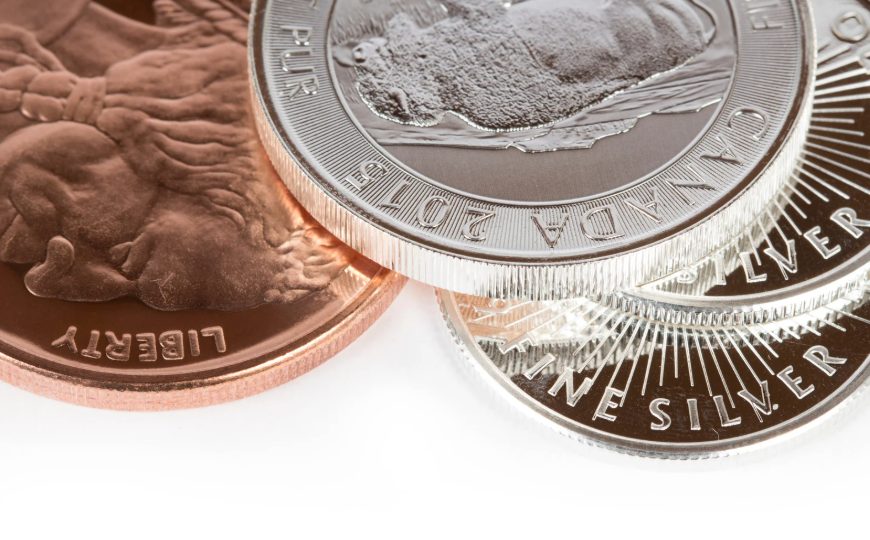
With the account funded, you can now purchase gold, silver, platinum, and palladium; however, not all precious metals work in an IRA, so you need to choose eligible precious metals. Here are some of the most common metals you can add:
- Certain gold bars from recognized refiners (99.5% purity or better)
- Certain physical gold coins (or other metals) that meet IRS criteria (some popular coins have specific exceptions, like American Gold Eagles.)
- Silver, platinum, and palladium products that meet standards
Work with your custodian and a vetted dealer to select eligible products. Consider the difference between segregated storage (your metals stored and labeled separately) against pooled storage (metals held in a shared pool). Segregated storage offered greater control and peace of mind but cost more. Some choose a hybrid approach — segregated for a core portion and pooled for a smaller amount to save on fees. (More on that, next.)
When choosing specific bars or coins, I verified the refiner, checked serial numbers, and confirmed that the product was IRS-approved. The dealer provided certification and the custodian handled the purchase and shipment to the depository.
Again, this is more reason to choose a really great IRA company.
Step 6 — Storage & Security (The Depository)
The metals get shipped by insured carrier straight to a secure, insured depository. Every custodian I’ve worked with partners with a well-known depository that offered both pooled and segregated storage. The depository provided proof of storage and inventory reports which the custodian included in my account statements.
Make sure you understand the storage fees — they are ongoing and typically charged annually. Also understand insurance coverage and auditing procedures.
Step 7 — Understand the Costs of a Gold IRA Retirement Account
Costs are where many new investors lose sight of the value proposition. There are several layers of fees to account for:
- Dealer premium: the markup above the spot price when you buy bars or coins.
- Custodian setup and annual fees.
- Storage and insurance fees at the depository.
- Transaction fees when buying or selling within the IRA.
- Potential shipping or handling charges.
When you tally everything, you may realize that your effective cost basis was noticeably higher than the spot price. That’s normal for physical metals, but be clear on the math. Don’t assume a Gold IRA is “cheap.” It is a different asset class with structural costs.
Step 8 — Reporting, Maintenance & Distributions
Your custodian will handle annual reporting and account statements. If you hold a Traditional Gold IRA, remember distributions are taxed as ordinary income. Roth Gold IRAs allow for tax-free qualified withdrawals if the account has met the conditions. Also, be aware of Required Minimum Distributions (RMDs) for traditional IRAs once you reach the prescribed age — your custodian may sell a portion of your metals if you need cash to meet RMDs. You can choose to hold precious metals in both traditional and Roth IRAs.
Your custodian should offer clear annual statements and explain how distributions are handled. If you plan to take in-kind distributions (physical delivery) in retirement, check with your custodian — many arrangements make this difficult or taxable.

Risks, Downsides, and What I Wish I Knew
A gold IRA rollover is not without risks, and everyone should understand that. Here are the main risks that you take when you open a new gold IRA account:
- Liquidity: Selling physical metals in an IRA often takes longer than selling other assets.
- Fees: Fees are part of every gold IRA, and they include storage fees, annual fees, maintenance fees, set up fees, etc.
- Price volatility: Gold prices rise and fall, and sometimes this is a drastic rise or fall.
- Scams: The industry has had its share of scammers and bad faith business practices. Research is so important.
- Complexity: Paperwork, shipping, storage, and tax implications add some complexity to these transactions.
If I could give one more piece of advice, it would be to budget more conservatively for fees and to prepare for slightly slower liquidity. Those two elements determine how hassle-free the experience is after the purchase.
Practical Tips from My Experience
Here are the tips I wish someone had given me at the start:
- Use a direct custodian transfer — avoid the 60-day rollover unless you have a backup plan.
- Vet custodians by asking for references and looking for clear fee schedules.
- Verify the dealer’s track record and ask for provenance on bullion and coins.
- Understand segregated vs pooled storage and choose based on your priorities.
- Budget for setup, storage, and transaction fees — they matter.
- Keep copies of all shipping, storage, and purchase documentation.
- Revisit allocation periodically — my 10% target required rebalancing after big market moves.
These practical steps made the whole process smoother for me, and I know that it will do the same for you.
Boost Your Retirement Plan with Precious Metals – Start the Rollover Process, Today
The process of setting up a gold IRA through a rollover can be intimidating, but it doesn’t have to be. You will feel more confident as you work with a good gold IRA company and custodian. They can help by looking at your retirement portfolio, offering suggestions based on your financial goals, and even help with the paperwork and rollover process with your plan administrator.
Most people allocate 5-15% of their portfolio, but the decision is yours. When you convert an IRA to gold in any amount, it’s a major portfolio stabilizer.
You should take some time to research. Having a good gold IRA company by your side is imperative, and setting up a new self-directed IRA can be confusing if you aren’t used to the process. Also, keep in mind that these retirement accounts aren’t for everyone; if you find that they are not for you, you can still invest in precious metals. Consider gold stocks or buying precious metals to store at home outside of a gold IRA.

Frequently Asked Questions (FAQ)
What exactly is a Gold IRA rollover?
A gold IRA rollover is a process that moves funds from an existing traditional IRA or 401(k) into one that is funded by precious metals. Many people choose to do this in times of economic uncertainty as a gold IRA lets you hold precious metals, which are historically solid during times of market volatility.
Can I roll over any retirement account into a Gold IRA?
If you have an existing retirement account, most of the time you can roll it over into a self-directed IRA. Employer sponsored accounts, however, may vary, so if you have a workplace retirement plan, there may be restrictions.
How much should I allocate to gold?
It depends on how risky you want to be. Most experts recommend that about 10% of a portfolio should be in precious metals.
Can I take physical delivery of my gold from an IRA?
Possibly, but this isn’t really practical. Taking physical delivery can be a taxable event and is typically only an option when distributions are allowed under IRA rules.
Is a Gold IRA a good hedge against inflation?
Yes, gold has historically preserved it’s value during times of inflation unlike traditional assets. However, it is volatile and not guaranteed. Use it as part of a diversified plan rather than your only investment plan.